Skip to content
Kokoszko

Energy analyst, Małopolska and across Poland

Solar PV and battery storage. Numbers first, then the decision.

I size the panels, the battery and the inverter settings from your bills and measured consumption, not from a rule-of-thumb table. Same method for a factory, an investor or a family home - only the scale changes.

installations taken from analysis to commissioning
500+
the year I started working in solar PV
2019
of data - where every analysis starts
12 months
Maksymilian Kokoszko next to a ground-mounted solar PV array in winter
I run every installation personally - from the first conversation to handover.

One day in a home with solar

At midday the panels produce more than the house uses. In the evening it's the other way round - the battery fills that gap.

  • Solar production
  • Home consumption
  • Evening power from the battery

Illustrative example. For your home I calculate these curves from your bills and meter data.

Businesses, manufacturers, investors

I check whether it pays off before you sign

An oversized PV system or a badly sized battery costs you for its whole working life, and the mistake only shows after the first year of billing. I set up the analysis to catch it before you sign.

Battery storage and peak shaving

First I establish what the battery is for, then its power, capacity and location. Economics come last. I model each source of savings separately and check they don't cancel each other out - for example, whether charging the battery would exceed your contracted capacity and eat the savings.

  • Arbitrage only with a price linked to the day-ahead market
  • Cell wear modelled, capacity guarantee written into the contract
Grid connection and hosting capacity

I check connection conditions, reactive power and the 1 MW threshold (based on inverter capacity) before the application goes in, not after the grid operator refuses it. PV raises tan φ, so I plan compensation into the project before it shows up on an invoice.

  • Grid connection application, including zero-export operation
  • Power evacuation, container substation, medium-voltage cable

Financial model and review of quotes

Instead of a rough payback period I calculate NPV, IRR and LCOE, with costs broken down by mounting type. Results come as a range, because day-ahead prices between 10:00 and 16:00 fall as more solar comes online in Poland.

  • Other companies' quotes broken down into technical components
  • At least three price scenarios, never a single number

Without your supply contract, I give ranges, not a payback period. Whether your price is fixed or linked to the day-ahead market changes the result by tens of percent. If the investment doesn't stack up, I'll tell you plainly and explain why.

Family homes

Design, installation and aftercare - one person from start to finish

Same approach as for businesses, at a smaller scale. I start from your invoices and, for an existing system, the data in your inverter app. I'm on site during installation and stay responsible for the system after it goes live.

A new solar PV system

I size the system for your last 12 months of consumption and your plans: a heat pump, an electric car, a pool. I fit a hybrid inverter from day one, so a battery can be added later without replacing hardware.

A battery for an existing system

Whether a battery pays off depends above all on how you're billed. Under Poland's net-billing scheme (credit in złoty) a battery earns several times more than under the older net-metering scheme. That's why the same battery can give two neighbours completely different results.

Inverter shutting down on sunny days

When grid voltage exceeds 253 V, the inverter shuts down and your solar power is lost. I start with a free complaint to the grid operator, then adjust the inverter settings, and only suggest a battery if that isn't enough. Adding panels while the problem remains only makes it worse.

A second opinion on a quote

I check whether the promised yield is realistic for your roof, whether the battery matches the system size, and whether anything is missing from the scope that you would have to buy later anyway. No obligation to work with me.

What your bill really depends on

I won't quote a savings percentage up front - without your data it would be a guess. Four things decide it, and I check each one before I prepare a proposal.

Billing scheme

The date your system first fed power into the grid decides whether you're on net-metering (energy offset) or net-billing (credit in złoty). I establish this before I calculate anything.

When you use electricity

Panels produce most at midday; homes use most in the evening. That gap decides whether a battery or more panels makes more sense.

Rising energy prices

Payback calculated at today's price understates the result. I show several price scenarios and what you'll pay over the next fifteen years, with and without the system.

Fixed charges

A PV system cuts the energy part of your bill, but fixed charges stay and your bill won't go below them. I give you that amount from your own invoice before you sign.

  • Thermo-modernisation tax relief - deductions of up to PLN 53,000 per taxpayer
  • Grants - I check eligibility and handle the application
  • Grid operator notification and fire safety paperwork - on my side

Always in the same order

I size the system last, not first. Same for a 10 kWp home system and a multi-megawatt-hour battery - only the amount of data changes.

  1. 1

    Data, not assumptions

    I work from twelve full months of invoices and your supply contract and, for larger sites, consumption measured every 15 minutes. I never extrapolate one month to a whole year: with a heat pump, January consumption can be dozens of times higher than July.

  2. 2

    Simulation and options

    I simulate production in a typical and a conservative case (P50 and P90), and work out hour by hour how much solar power you'll use directly. Options go side by side, including the weaker one. The decision is yours.

  3. 3

    Installation and checking results

    I'm on site during installation and handle the grid notifications and paperwork. After commissioning I compare production with the simulation. If the system underperforms, I find the cause rather than blame the weather.

Roofs, ground mounts, batteries, heat pumps

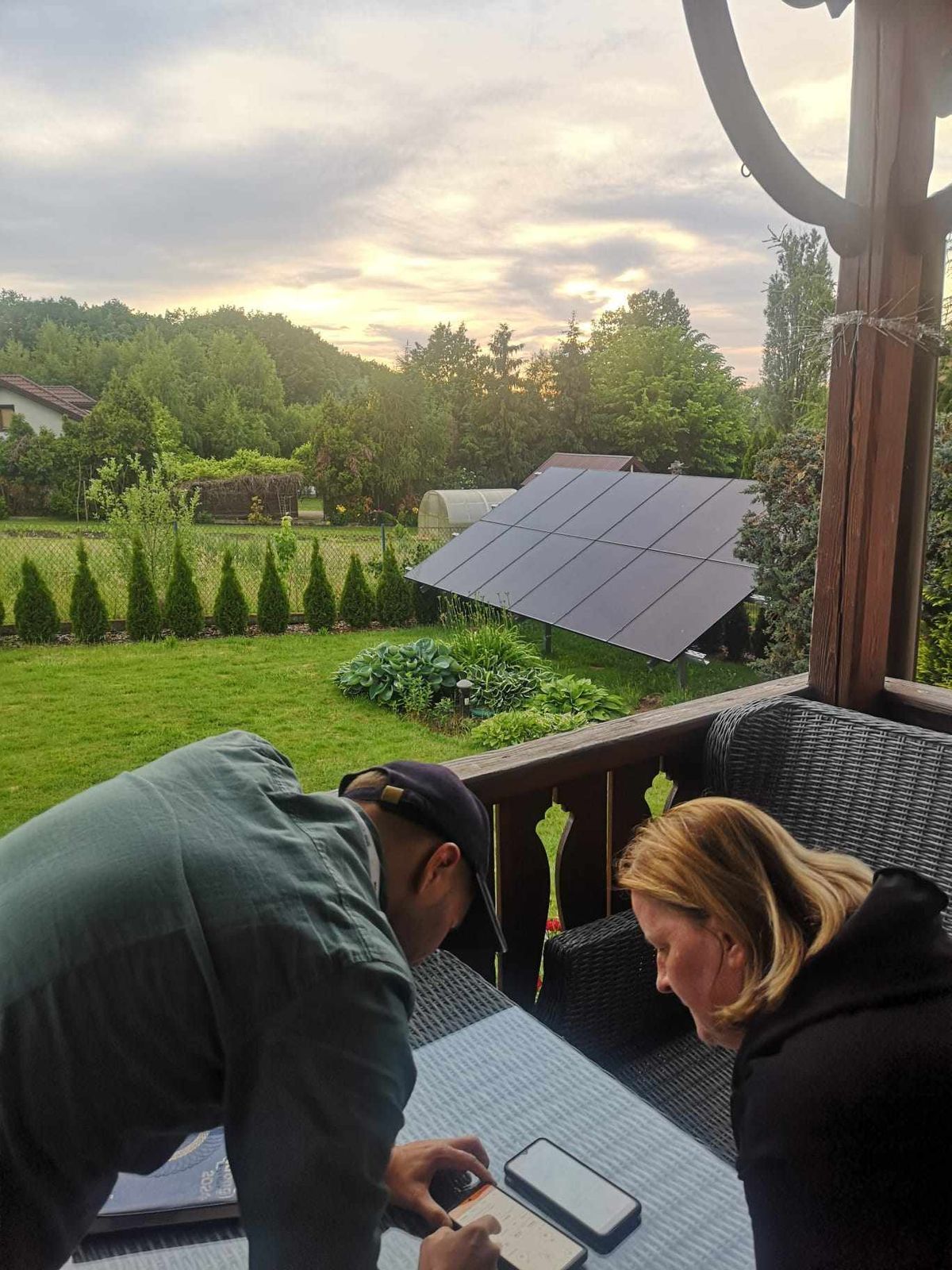
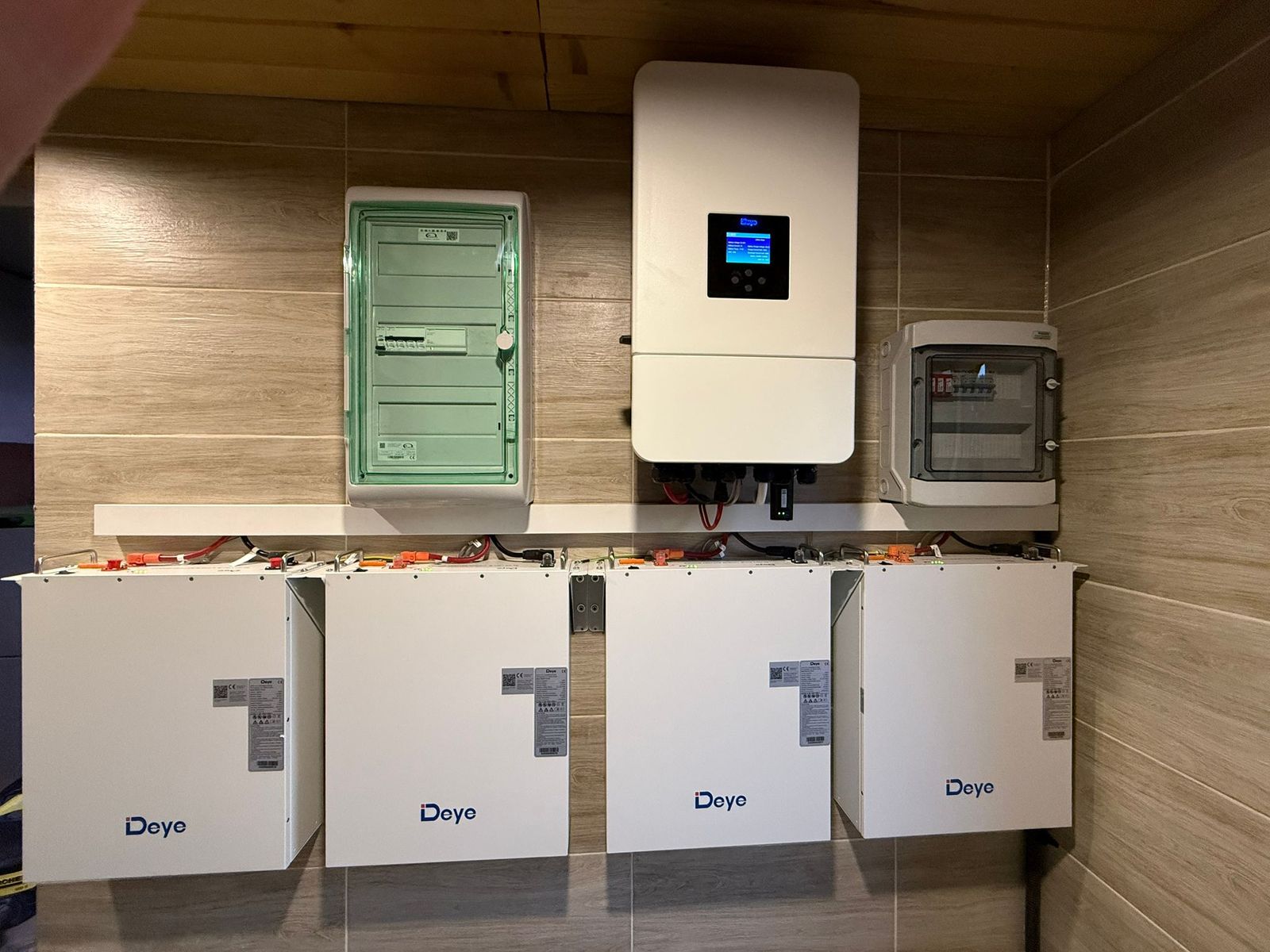
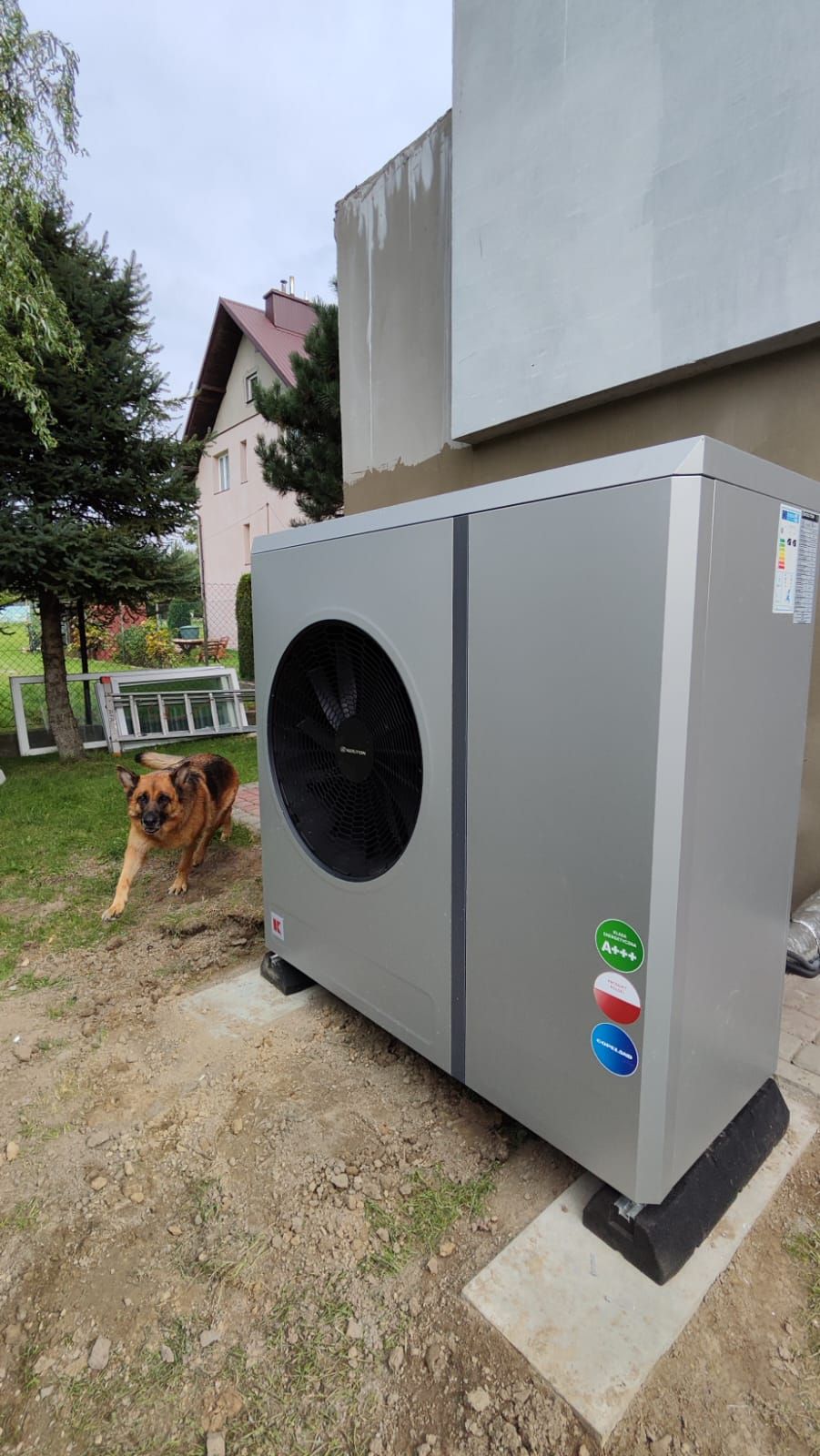
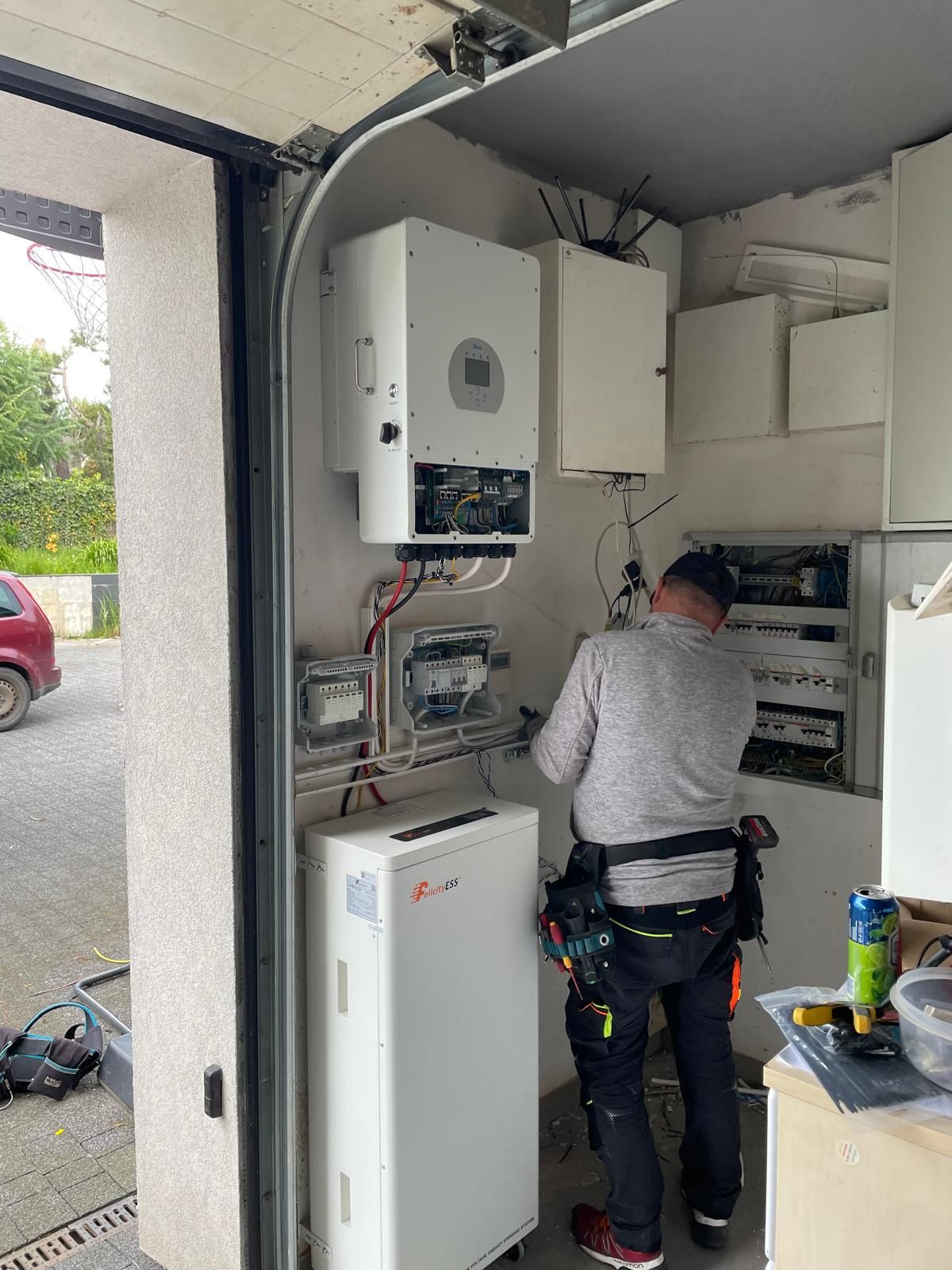
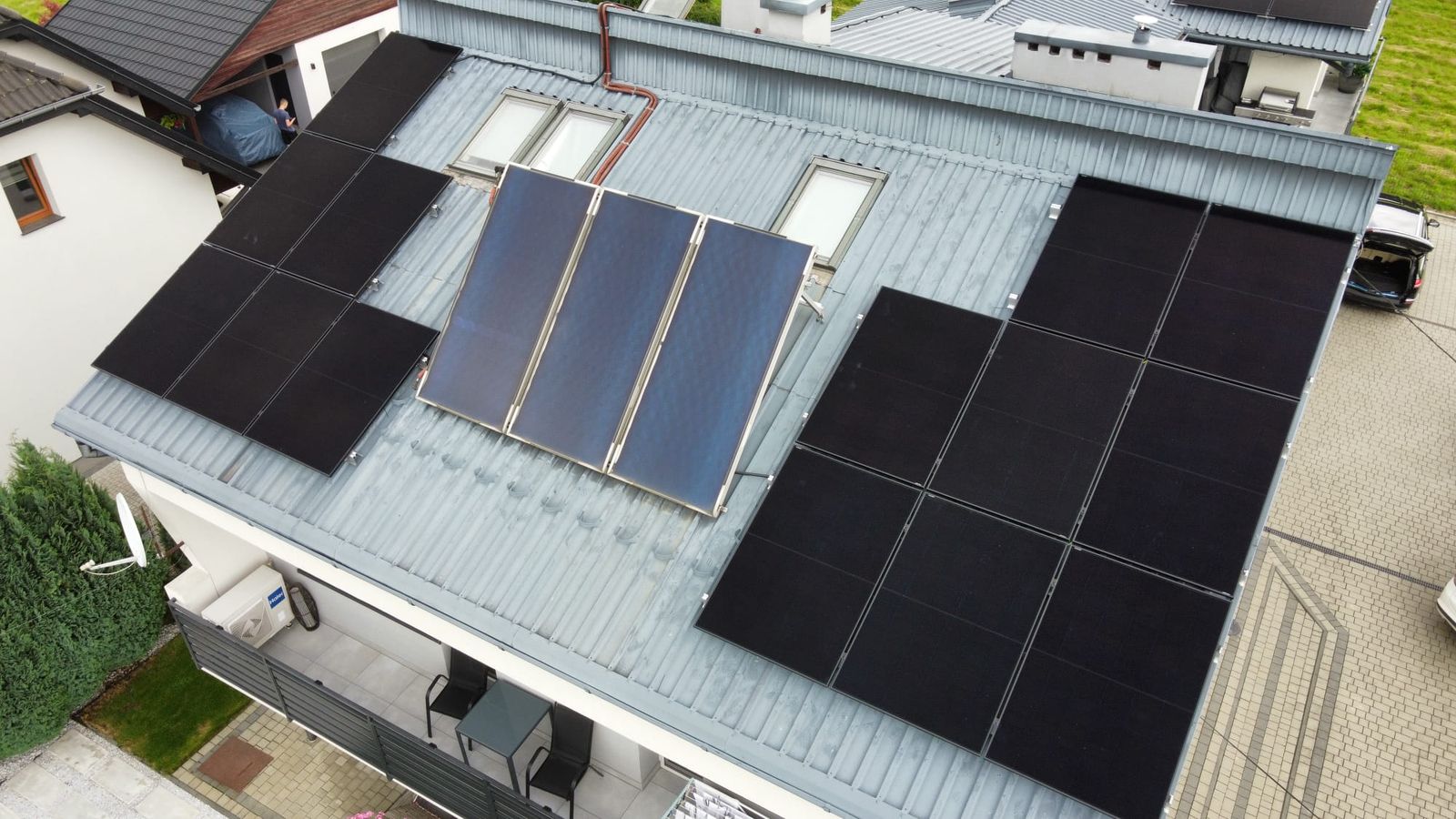
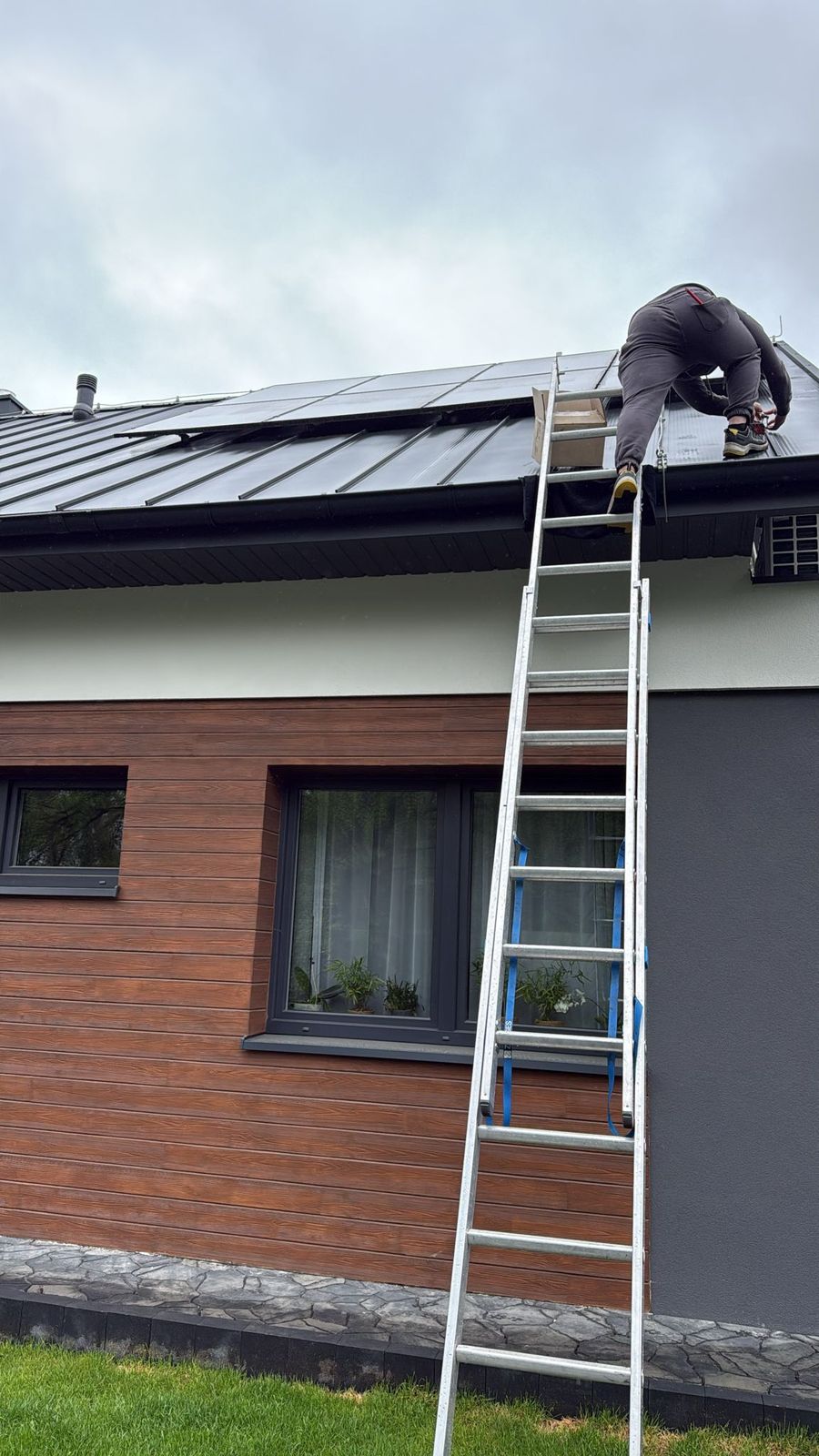
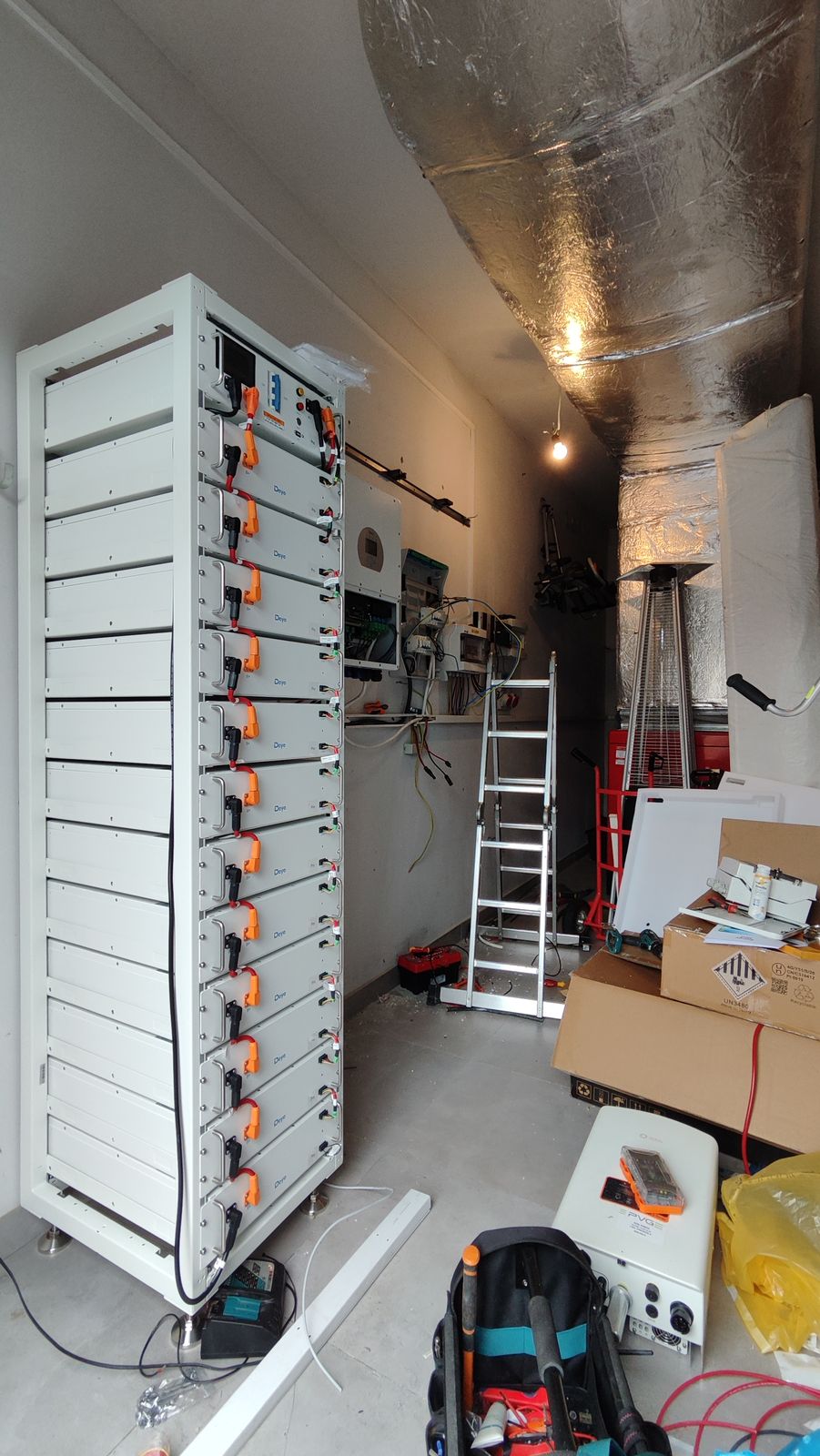
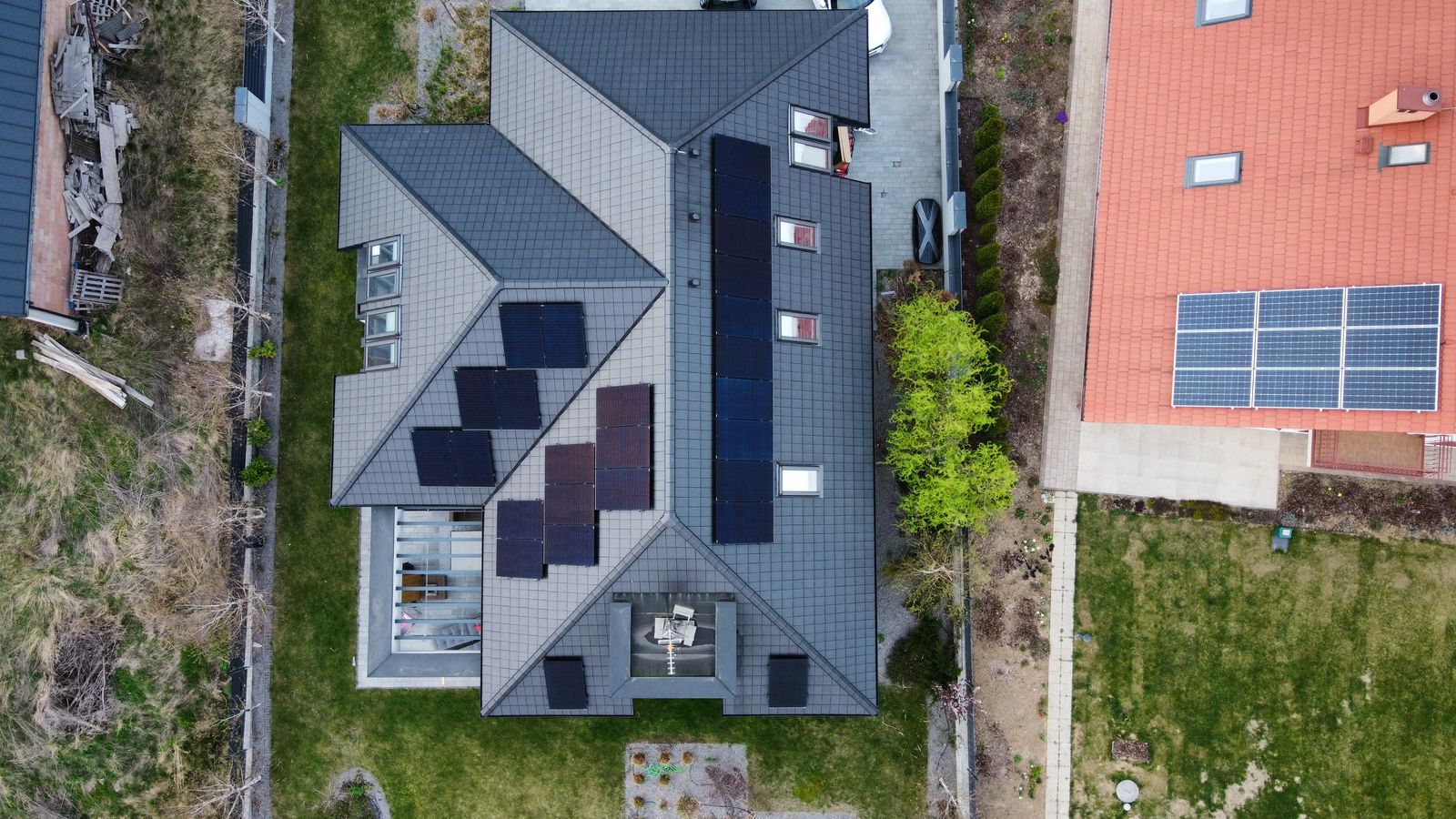
Photos from my own projects: pitched and multi-pitch roofs, ground-mounted arrays and battery storage of different sizes.

Click a photo to enlarge

Maksymilian Kokoszko wearing a hard hat on an installation site
Maksymilian Kokoszko, energy analyst

How I know what works

I've worked in solar PV since 2019. I've taken over 500 installations from the first look at an electricity bill to commissioning and settlement with the grid operator - and I was on site for every one.

That number matters for one reason: I see what fails after three years, not what looks good in a quote. I know where safe installation ends on a difficult roof, how the grid behaves where there's a lot of solar, and which setups lead to service calls later.

I work on terraced houses with difficult roofs, villas and older buildings that need extra care, as well as manufacturing plants, farms and housing communities.

Installation standard

  • TÜV-certified cables, cross-section matched to cable length
  • Original MC4 connectors crimped with calibrated tools
  • Self-extinguishing tape and fire protection
  • Electrical test report at handover
  • Any independent auditor can inspect the installation

One contact throughout

From analysis, design, quote and installation to grid notifications, grants and servicing, you deal with me - in Polish or in English. Your case never moves to another department, and you never have to explain everything again.

What you often get

  • System size taken from a table or a calculator built on averages.
  • Payback calculated at today's price, without fixed charges.
  • Salesperson, installation crew and service are three different companies.
  • Contact ends on handover day.

Working with me

  • I choose equipment for your consumption, not for what the installer happens to have in stock.
  • I use conservative assumptions and give a range, with the assumptions listed.
  • If something doesn't pay off, I say so before you decide - even if it costs me the sale.
  • I stay responsible for the system after commissioning and check production in the first season.

Questions I hear most often

Can you handle the Polish paperwork?

Yes. The grid operator notification, fire safety documentation and grant applications are all in Polish, and I prepare them as part of the process. I also provide the documents you need to claim the tax relief.

Before you sign anything, I walk you through each document in English, so you know exactly what it says and what you are agreeing to.

Will expanding my system make me lose net-metering?

No. Your right to net-metering depends on the date your system first fed power into the grid, not on its size. Expanding doesn't take it away.

One detail: up to 10 kW you get back 0.8 kWh for every kWh exported; above 10 kW, 0.7 kWh. Once you cross the threshold, the lower ratio applies to the whole system, so the expansion has to be large enough to make up for it. That's a calculation for your specific case.

Does a home battery pay off?

Above all, it depends on how you're billed. Under net-billing you sell your surplus cheaply and buy power back in the evening at a much higher price - a battery keeps that energy at home. Under net-metering the gain is much smaller, so the same battery can pay back over a very different period for two neighbours.

The second factor is when you use electricity. If most of it goes in the evening, the battery runs a full cycle every day. If you use power mainly during the day, the benefit is smaller and sometimes extra panels are the better choice.

Why does my inverter shut down on the sunniest days?

An inverter must disconnect when the 10-minute average grid voltage exceeds 253 V. In areas with a lot of solar this happens regularly in the middle of the day - exactly when your panels should produce the most.

The first step costs nothing: a voltage-quality complaint to the grid operator, which is responsible for keeping voltage within limits. The second is setting the inverter to reduce output instead of shutting down. If that isn't enough, a battery with an export limit helps. In practice the problem stops getting in the way, although no honest installer will promise it disappears completely. Adding panels before the voltage problem is solved only makes it worse.

What funding can I get?

For homeowners, the most reliable option is the thermo-modernisation tax relief (Article 26h of the Polish Personal Income Tax Act). It applies if you pay income tax in Poland and own or co-own the house. You deduct the costs from your taxable income, up to PLN 53,000 per taxpayer, and how much comes back depends on your tax rate. If both spouses own the house and both pay for the work, each gets their own limit.

There are also grants for home batteries, housing communities and businesses, but their terms and application windows change. I check the current rules before preparing a proposal and never count on funding you can't get.

Let's talk about your numbers.

A battery for a plant, a system for your home, an expansion or a second opinion on a quote - we always start with a conversation and a look at your invoices. That conversation is free and comes with no obligation.

Maksymilian Kokoszko, phone +48 570 057 399
Coverage Małopolska - on-site visits Across Poland - remote analysis and audits

What to have ready for our call

  • Electricity invoices from the last 12 months, or your annual statement
  • Your plans: heat pump, electric car, expansion
  • For an existing system - access to the inverter app

No documents to hand? That is fine - I will tell you where to find them, even if they are only available in Polish.

Confidentiality. Your company's invoices and load profiles are confidential. If you like, I'll sign an NDA before you share them.

A few words about your situation

The more detail you give, the more specific my reply. I get back to you within 24 working hours.

Your data is controlled by Maksymilian Kokoszko and used to reply to your enquiry - see the privacy policy.